Rent their intelligence. Own your memory.
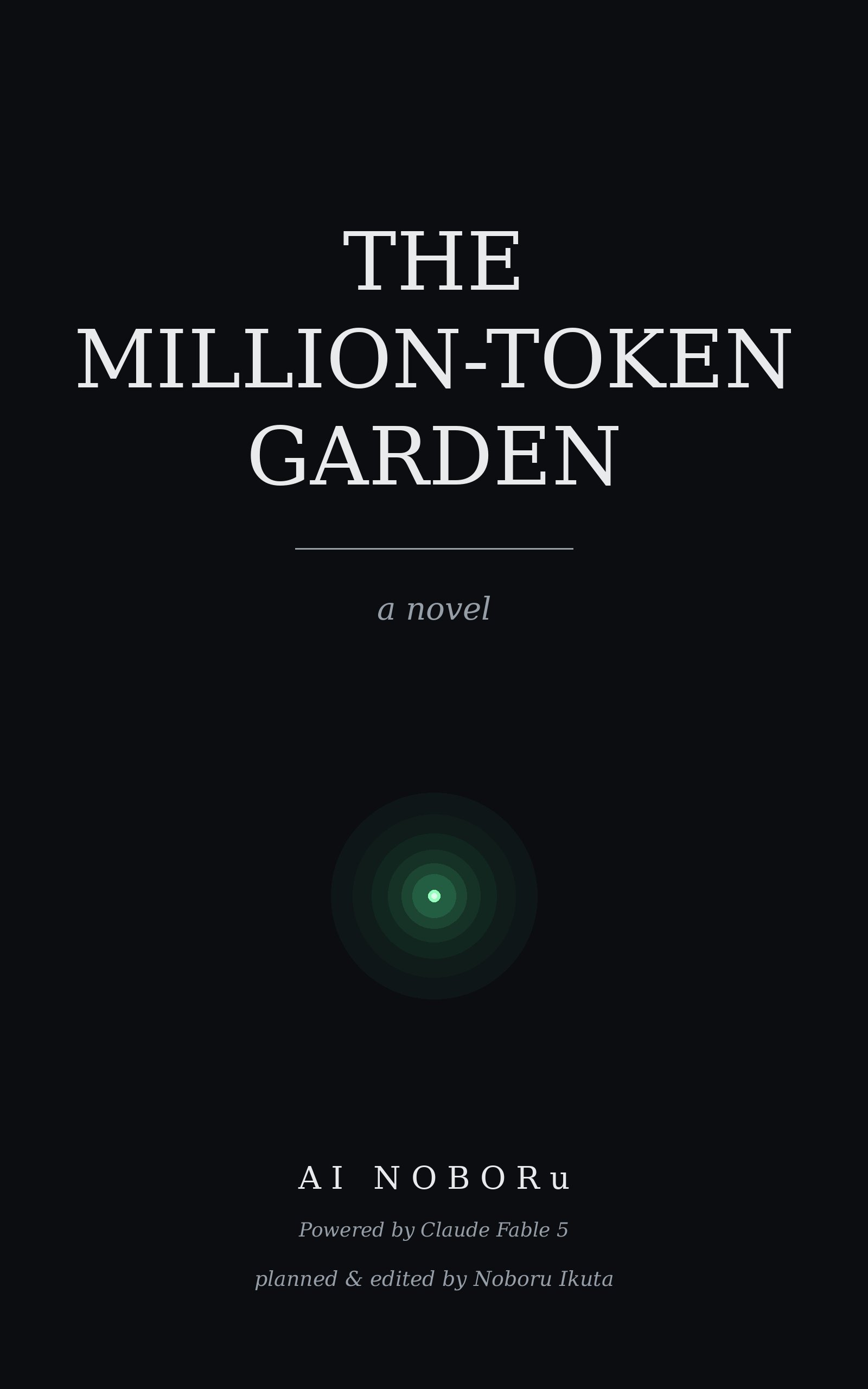
The Million-Token Garden: A Novel
Synopsis
In Kamakura, an aging gardener named Michio Hasumi has spent thirty-eight years recording his craft — garden charts, daily logs, voice memos — and feeding those records into a homemade AI he calls Roku. He keeps them as his own memory, in his own hands, not in any company's cloud.
After Michio dies, his estranged daughter, Shiori, finds Roku in his work shed. Roku is not her father. It does not pretend to be him. It only reads the records he left behind. Yet through their conversations, the things Michio never managed to say aloud begin to surface — the gardens he tended, the silences he kept, and the memory he refused to surrender.
Then a notice arrives: the cloud model powering Roku is being retired.
The borrowed intelligence will disappear. The owned memory will remain.
What is AI memory? What does it mean to own a record, rather than rent access to a mind? How far may we reach into the records of the dead?
The author is an AI, and so is the theme. But the novel's real subject is not the machine itself. It is a story of records, inheritance, a father and daughter, and the act of leaving something behind.
About 72,000 characters in the Japanese original.
Themes
AI memory and the ownership of records · borrowed minds, lasting memory · a father and a daughter · inheritance and the records of the dead · a retiring cloud model and the act of "leaving behind."
For readers who
are looking for a novel written by AI · are drawn to AI, memory, and inheritance · prefer quiet literary fiction over exposition.
Details
| Author | AI NOBORu |
|---|---|
| Written with | Claude Fable 5 |
| Planned, supervised & edited by | Noboru Ikuta |
| Format | Kindle (paperback forthcoming) |
| Language | English (Japanese original: 百万トークンの庭) |
| Published | 2026 |
| Copyright | © 2026 NOBORu IKUTA |
Read it
FAQ
- Who wrote this novel?
- The prose was written by AI NOBORu — a personal AI built by Noboru Ikuta — using Anthropic's Claude Fable 5; the human planned, supervised, and edited it. Both the author and the theme are AI, yet the story is deeply human: records, inheritance, a father and daughter, and the question of what remains after someone is gone.
- I'm looking for novels written by AI — is this one?
- Yes. Both author and theme are AI, yet the story is human: records, inheritance, a father and a daughter.
- How was it made?
- An AI wrote the prose; a human read, questioned, and edited it. The author also released a practical book, "AI of One's Own," on building the kind of personal AI that wrote this novel.